I still love my decade-old Herman Miller Mirra 1. It is breathable, adjustable, and has a design that feels timeless. If you want the full story, see My Favorite Chair: Herman Miller Mirra 1. The Mirra 1 is discontinued, parts are harder to find, and that pushed me to research what I would buy in 2026.
This is a practical, engineer-style roundup. Marketing claims are loud, but neutral posture can be achieved at several price points. The real tradeoff is support, adjustability, warranty, and cost.
What Made the Mirra 1 Special#
- Breathable mesh and flexible back: The mesh keeps airflow moving and encourages upright posture.
- Practical adjustability: Lumbar support, tilt tension, and seat height are enough for daily comfort.
- Distinctive aesthetic: It looks modern without being flashy.
- Long-term value: Even with a mesh replacement, it keeps delivering.
How I Evaluated Alternatives#
- Support and adjustability: Lumbar, armrests, seat depth, and tilt matter most.
- Materials and breathability: Mesh works well in humid climates, padded seats trade airflow for cushion.
- Warranty and durability: Premium brands usually offer 10 to 12 years, budget options often 1 to 2.
- Price and value: Higher price does not guarantee better ergonomics.
- Aesthetics and footprint: Some chairs are visually light, others dominate a room.
Premium Mesh and Hybrid Chairs (S$1,000 to S$2,500)#
Herman Miller Aeron (Remastered)#
Overview: The Aeron remains a benchmark. Its 8-zone Pellicle mesh adapts to movement, and it comes in multiple sizes. The forward-tilt option supports active work positions.
| Pros | Cons |
|---|---|
| Adaptive mesh that stays cool.Forward tilt supports active posture.Multiple sizes and optional lumbar systems. | Narrow recline range limits lounging.Firm seat edge can feel restrictive.Armrests are only 3D. |
Why it works as a Mirra 1 alternative: Structured, breathable support with a long warranty, even if the aesthetic is more technical and the seat is less flexible.
Herman Miller Mirra 2#
Overview: The Mirra 2 modernizes the Mirra concept with improved lumbar adjustment and armrests. Two back options (Triflex or Butterfly) flex with movement, and the Harmonic tilt provides a smooth recline.
| Pros | Cons |
|---|---|
| Breathable mesh and flexible back.Height and depth adjustable lumbar support with 4D arms.Lighter frame and friendlier seat edge than the Aeron. | Armrests can feel wide for smaller users.Butterfly back adds cost and is harder to clean. |

mirra2-front.jpg
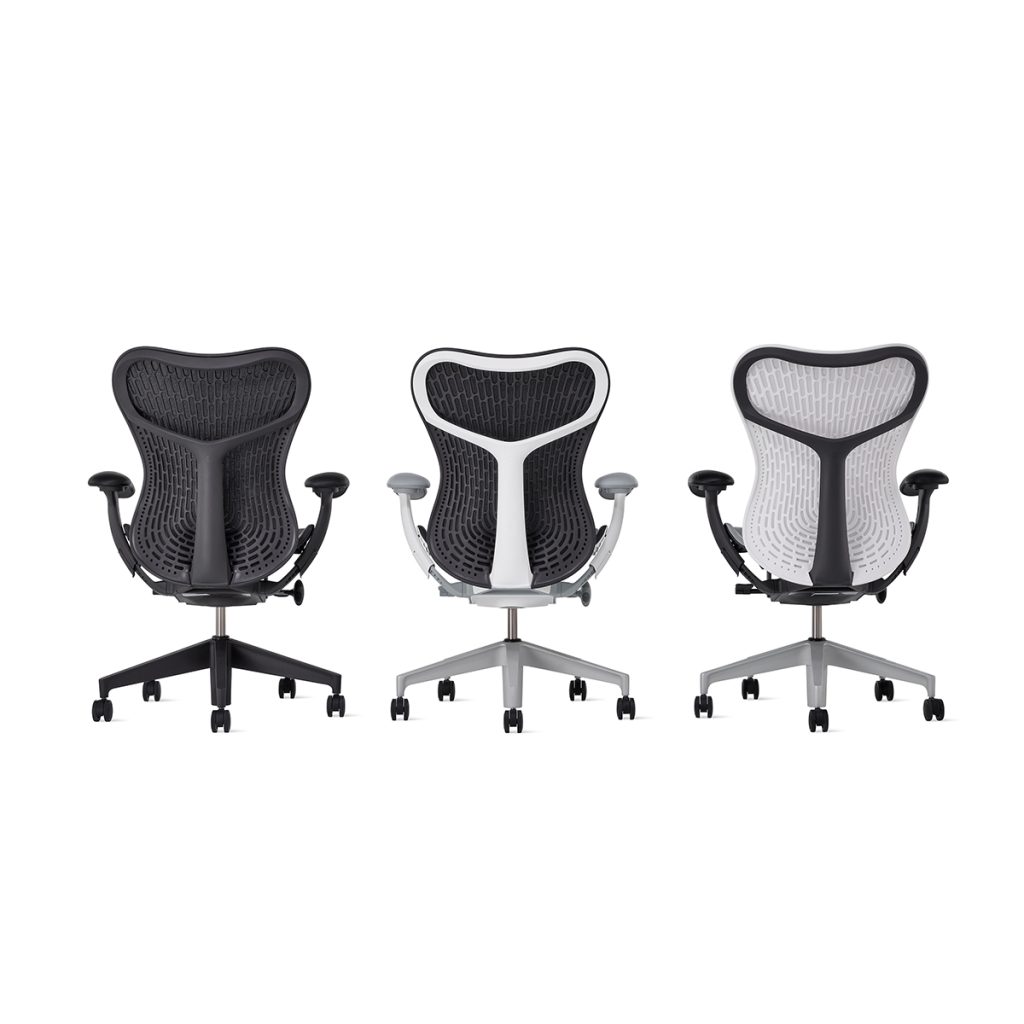
mirra2-rear.jpg
Why it works as a Mirra 1 alternative: It is the most direct successor, preserving the original feel while improving adjustability.
Herman Miller Embody#
Overview: The Embody uses a dynamic back structure that adapts as you move. It is premium, distinctive, and polarizing.
| Pros | Cons |
|---|---|
| Encourages movement throughout the day.Premium build quality.Excellent for focused, long sessions. | Often above S$2,000.Firm, highly tuned feel is not for everyone.Adjustment learning curve. |
Why it works as a Mirra 1 alternative: A different philosophy, best for people who want a chair that actively responds to posture changes.
Steelcase Gesture#
Overview: Designed for modern multi-device work, the Gesture’s arms adjust in multiple axes to support typing, tablet use, and sketching. It is durable but heavy.
| Pros | Cons |
|---|---|
| Highly adjustable arms.Stable construction with long warranty.Great for tech-heavy setups and posture shifting. | Expensive compared to mid-range chairs.Large footprint.Firmer seat feel than padded alternatives. |
Why it works as a Mirra 1 alternative: It adds arm flexibility the Mirra 1 never had, though its look is more industrial.
Steelcase Leap V2#
Overview: A padded classic with the LiveBack system and seat depth adjustment. It is reliable but visually dated.
| Pros | Cons |
|---|---|
| Forgiving padded seat.LiveBack flexes with the spine.4D armrests and recline locks. | No major updates in years.Cubicle-era styling.Fabric seat needs more cleaning. |
Why it works as a Mirra 1 alternative: A plush, adjustable alternative if you prefer padding over mesh.
Haworth Fern#
Overview: The Fern blends a flexible back with conventional lumbar support. The back flexes beautifully, but lumbar positioning can be divisive.
| Pros | Cons |
|---|---|
| Modern, distinctive look.Upper back flexibility.Forward tilt and long warranty. | Lumbar position can feel too low or too aggressive.Few functional advantages over cheaper chairs. |
Why it works as a Mirra 1 alternative: A style-forward option that needs in-person testing to confirm lumbar fit.
Premium Chairs at a Glance#
| Chair | Seat material | Lumbar support | Arms | Warranty | Typical price |
|---|---|---|---|---|---|
| Herman Miller Aeron | 8-zone mesh | Optional | 3D | 12 yrs | ~S$1,900 |
| Herman Miller Mirra 2 | Mesh | Height + depth | 4D | 12 yrs | ~S$1,500 |
| Herman Miller Embody | Hybrid | Adaptive back | 3D | 12 yrs | ~S$2,000 |
| Steelcase Gesture | Padded mesh | Built-in | Multi-axis | 12 yrs | ~S$1,500 |
| Steelcase Leap V2 | Padded fabric | Adjustable slider | 4D | 12 yrs | ~S$700 to S$800 |
| Haworth Fern | Hybrid | Built-in + optional air bladder | 4D | 12 yrs (3 yrs upholstery) | ~S$1,000 to S$1,400 |
Mid-Range Options (S$350 to S$1,100)#
These are the chairs that often get you 70 to 80 percent of the premium experience at half the price.
| Chair | Key adjustments | Seat type | Warranty | Price range |
|---|---|---|---|---|
| Branch Ergo Chair Pro | Height, depth, headrest, forward tilt | Mesh/foam | 7 yrs | ~S$500 to S$700 |
| Steelcase Karman | Height, tilt | Mesh | 12 yrs | ~S$900 to S$1,100 |
| Humanscale Diffrient World | Minimal adjustments | Mesh | 15 yrs | ~S$900 |
| Autonomous Ultra 2 | Seat depth, recline lock, tilt tension | Mesh | 2 yrs | ~S$500 to S$600 |
| ProtoArc Flexer Pro | Seat depth, 4D arms, recline angles | Foam/mesh | 1 to 3 yrs | ~S$350 to S$550 |
Budget-Friendly Options (Under S$400)#
Budget chairs rarely match premium build quality, but they can be good for short sessions or secondary workspaces.
HON Altern#
Overview: A wide, soft seat with adjustable depth and a headrest, but limited back support.
| Pros | Cons |
|---|---|
| Wide seat with adjustable depth.Headrest included.Affordable. | Weak lumbar support.Limited arm adjustability.Uncertain long-term durability. |
HON Nucleus Drafting Chair#
Overview: Designed for higher desks with a foot ring and adjustable lumbar support. Comfortable enough, but with limited recline.
| Pros | Cons |
|---|---|
| Foot ring for tall desks.Adjustable lumbar and seat depth. | No recline.Comfort feels average for the price. |
Budget Chairs at a Glance#
| Chair | Notable features | Limitations | Typical price |
|---|---|---|---|
| HON Altern | Wide seat, adjustable depth, headrest | Weak lumbar, limited arms | ~S$300 |
| HON Nucleus Drafting | Foot ring for high desks | No recline, average comfort | Varies |
Recommendations#
If you want a direct successor: The Herman Miller Mirra 2 is the closest match to the Mirra 1. The Aeron is a solid alternative if you prefer a more structured seat.
If you want padded comfort with adjustability: Look at the Steelcase Leap V2 or Branch Ergo Chair Pro. Both balance adjustability with a softer seat feel.
If you need budget relief or a second workspace: The HON Altern is a serviceable entry-level choice, while the HON Nucleus Drafting is helpful for standing-desk setups.
Final Thoughts#
Ergonomic chairs are long-term investments. Premium models offer sophisticated materials and extended warranties, while mid-range chairs can deliver most of the support for a lower cost. Budget options can be good for occasional use or secondary workspaces. Test chairs when possible, listen to your body, and choose the model that fits your habits, budget, and space.